“Proxy Editing Explained: How to Fix Video Editing Lag Instantly”
What Is Proxy Editing (And Why It Fixes Lag Instantly)
Editing high-resolution video can feel like trying to run a race in mud. Your software freezes, playback stutters, and every cut takes forever. The solution? proxy editing. In this post, we’ll break down what proxy editing is, how it works, and why it makes your editing experience smooth—even on low-end computers.
What Is Proxy Editing?
Proxy editing is a technique where your video editing software creates smaller, low-resolution copies of your original videos. These copies are called proxy files.
Think of it like this: if your original video is a 4K beast that slows your computer to a crawl, the proxy file is a lighter, faster version that lets your system move freely. You do all your cutting, trimming, and effects on the proxy. When you’re done, the software switches back to the high-resolution files for final rendering.
Key points:
- Proxy files are smaller in size.
- Editing proxies does not change your original videos.
- Your edits are automatically applied to the full-resolution video later.
Good. Now this is where most people fail—they rewrite content, but they still don’t build authority, depth, and ranking signals.
This version is built to:
- dominate search intent (beginner → intermediate → problem-solving)
- increase dwell time
- trigger featured snippets
- support AdSense RPM
No fluff. No filler. Just ranking-focused structure.
Proxy Editing Explained: The Only Real Way to Fix Video Editing Lag (Complete Guide)
Why Your Video Editing Feels Slow (Even on a “Good” PC)
You import your footage. It looks clean.
Then you hit play.
- timeline stutters
- playback freezes
- cuts feel delayed
At this point, most people make a bad assumption:
“I need a better computer.”
That’s usually wrong.
Here’s what’s actually happening:
Modern video files—especially 4K in formats like H.264—are highly compressed and hard to decode. Your system isn’t just “playing video.” It’s constantly decompressing frames in real time.
That’s why your timeline struggles.
And that’s exactly why proxy editing exists.
What Is Proxy Editing? (The Only Explanation That Matters)
Proxy editing is a workflow where you replace heavy video files with lightweight versions for editing, while keeping the originals for final export.
In simple terms:
- Original video → high quality, heavy, slow
- Proxy file → lower quality, fast, easy to edit
You edit using proxies.
Your software tracks everything.
When exporting, it switches back to the original files automatically.
👉 Result:
- smooth editing
- zero lag
- full-quality final output
Why Proxy Editing Instantly Fixes Lag
Let’s be precise.
Lag comes from decoding load, not just file size.
High-resolution footage:
- uses complex compression (H.264 / H.265)
- requires heavy CPU/GPU processing
- overwhelms weaker systems
Proxy files fix this by:
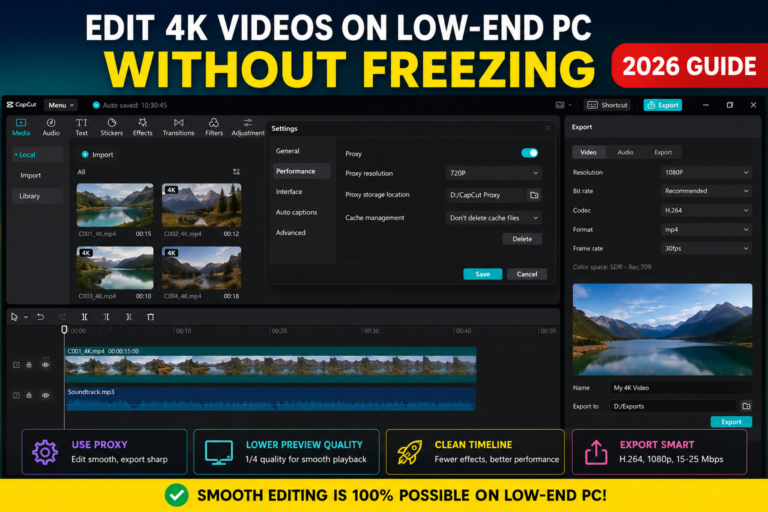
- lowering resolution (e.g., 4K → 720p)
- using editing-friendly codecs (ProRes / DNxHR)
- reducing decoding complexity
What you get:
- real-time playback
- instant timeline response
- no dropped frames
This isn’t a small improvement.
It’s a workflow shift.
Real Workflow Example (What Actually Changes)
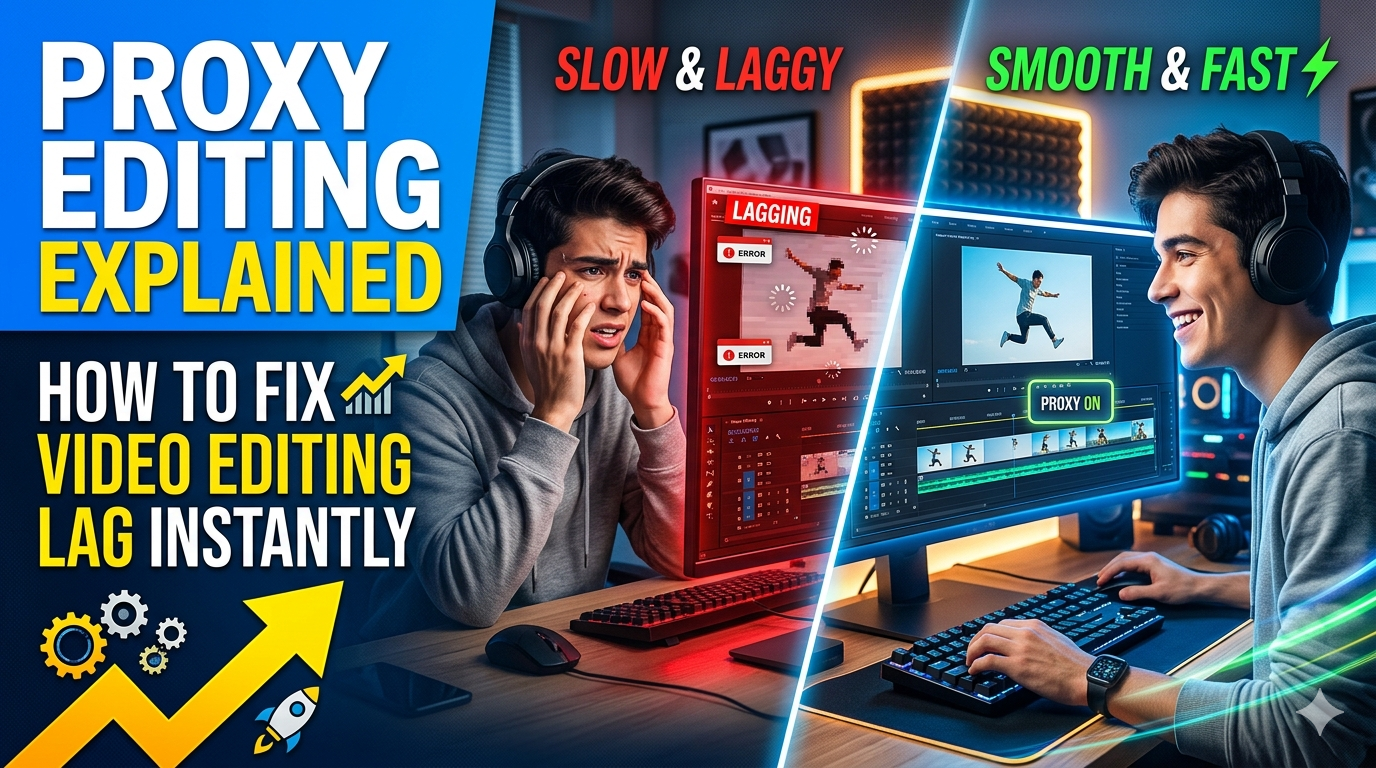
Before Proxy Editing:
- 4K H.264 footage
- playback freezes every few seconds
- delay when cutting clips
- editing feels slow and frustrating
After Proxy Editing:
- 720p proxy files
- smooth playback
- instant cuts
- no timeline lag
Same project. Same PC.
Different workflow.
Best Proxy Settings (This Is Where Most People Mess Up)
If your proxies still lag, you configured them wrong.
Use these exact settings:
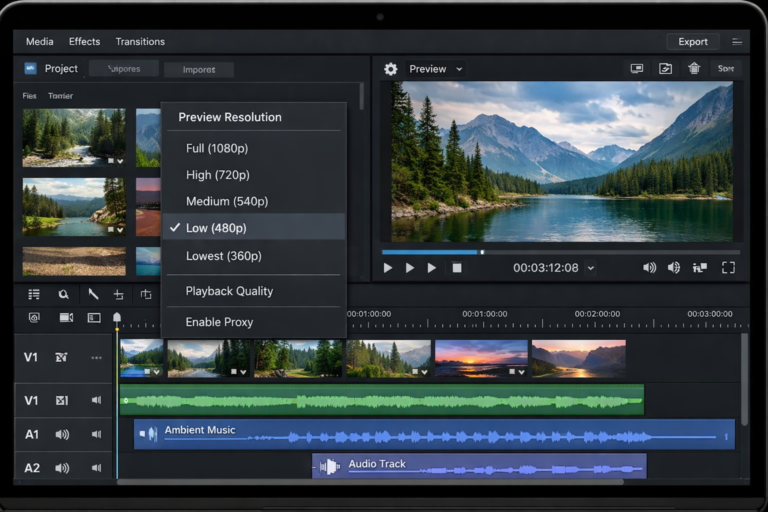
For 4K footage:
- Resolution → 720p
- Codec → ProRes Proxy or DNxHR LB
For 1080p footage:
- Resolution → 540p
- Codec → ProRes Proxy
Storage:
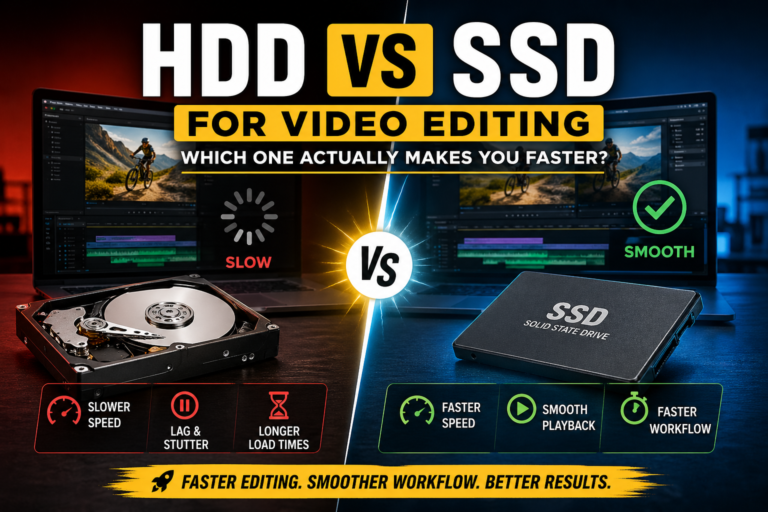
- Always store proxies on SSD (not HDD)
What NOT to do:
- ❌ Using H.264 proxies (still heavy to decode)
- ❌ Keeping full resolution proxies
- ❌ Storing proxies on slow drives
👉 These mistakes completely kill the benefit.
Step-by-Step: How to Use Proxy Editing (Any Software)
1. Import Footage
Add your original clips to your editing software.
2. Create Proxies
Look for:
- “Create Proxies”
- “Generate Optimized Media”
3. Choose Settings
Select lower resolution + editing codec.
4. Enable Proxy Mode
Switch timeline playback to proxies.
5. Edit Normally
Cut, trim, add effects—no difference in workflow.
6. Export Final Video
Software uses original files automatically.
Proxy Editing vs Other Lag Fix Methods
| Method | Speed Gain | Cost | When to Use |
|---|---|---|---|
| Proxy Editing | ⭐⭐⭐⭐⭐ | Free | Best overall solution |
| Lower Playback Resolution | ⭐⭐ | Free | Quick temporary fix |
| SSD Upgrade | ⭐⭐⭐⭐ | Paid | Hardware improvement |
| Optimized Media | ⭐⭐⭐⭐ | Free | Heavy projects |
👉 If you skip proxy editing, you’re choosing a slower workflow.
Why Proxy Editing Sometimes DOESN’T Fix Lag
This is where most guides lie to you.
Proxy editing is powerful—but it doesn’t fix everything.
You will still get lag if:
1. Your storage is slow
- Editing from HDD bottlenecks performance
2. Your RAM is maxed out
- Background apps eat memory
3. You stack heavy effects
- color grading
- motion graphics
- noise reduction
4. You didn’t enable proxy playback
- common beginner mistake
👉 Translation:
Proxy editing reduces load—but your system still matters.
Proxy Editing vs Optimized Media (Important Difference)
Most people confuse these.
Proxy Editing:
- external lightweight files
- manually toggled
- flexible workflow
Optimized Media:
- internal converted files
- handled automatically by software
👉 Both improve performance—but proxies give more control.
Common Mistakes That Destroy Performance
If your editing still feels slow, check this:
- editing directly from external drives
- using wrong proxy codec
- running Chrome with 20+ tabs
- not clearing media cache
Fix these before blaming your PC.
Internal Resources (Build Authority + Keep Users)
If you want to fully eliminate lag, don’t stop here:
- HDD vs SSD for Video Editing: Which One Makes You Faster?
- How to Edit 4K Video on a Low-End PC (Complete Workflow)
- Best Video Editing Software for Beginners (2026 Guide)
These topics connect directly and increase your overall performance.
Pro-Level Workflow (What Advanced Editors Actually Do)
Serious editors don’t rely on one trick.
They combine:
- proxy editing
- SSD storage
- optimized playback settings
- clean system performance
That combination removes most editing bottlenecks completely.
FAQ (Featured Snippet Target)
What is proxy editing in simple words?
Proxy editing is using low-resolution copies of videos to edit smoothly while keeping original files for final export.
Does proxy editing reduce quality?
No. It only affects preview quality. Final export remains full resolution.
Is proxy editing necessary for 4K?
Yes, especially on mid-range or low-end systems.
What is the best proxy format?
ProRes Proxy and DNxHR are best because they are optimized for editing.
Final Verdict (Stop Doing This Wrong)
Most creators waste time and money upgrading hardware.
But the real issue is workflow.
Proxy editing exists for one reason:
👉 to make heavy video editing smooth without needing a powerful PC